
The short answer
Match the machine to the material. Use a rammer for cohesive soils such as clay and for narrow trenches. Use a vibratory plate for granular soils, sand, gravel and backfill, and a reversible plate for thicker layers. Use a walk-behind roller for larger areas and asphalt. Always compact in thin, even layers.
Match the compactor to the soil
| Material | Best machine | Why |
|---|---|---|
| Clay, silt (cohesive) | Vibratory rammer | High-impact blows push out air and water. |
| Sand, gravel (granular) | Single-direction plate | High-frequency vibration settles particles. |
| Thick granular layers, backfill | Reversible plate | Higher force and works in tight spaces in both directions. |
| Mixed soils | Rammer or heavy reversible plate | Depends on the clay content. Test a trial area. |
| Asphalt patching, small areas | Plate with water tank | Water stops hot mix sticking to the plate. |
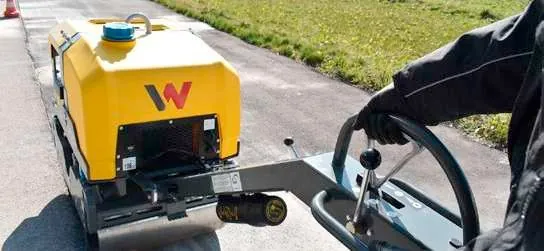
| Footpaths, parking, larger asphalt | Walk-behind roller | Even, smooth finish over larger areas. |
Compact in layers
Every machine compacts only to a limited depth. Spread fill in thin, even layers and compact each before placing the next. Heavier reversible plates and rammers allow thicker layers than light plates.
Moisture matters
Soil compacts best near its optimum moisture content. Too dry and particles will not settle; too wet and the soil pumps under the machine. Adjust with water or by drying before compacting.
Trenches and confined spaces
Rammers and narrow reversible plates work in trenches around pipes and cables, where a roller cannot reach. Battery-powered rammers produce no exhaust in trenches and enclosed spaces.
Equipment for this application
- Wacker Neuson rammers, vibratory plates and walk-behind rollers
- McCloskey crushers and screeners for producing sub-base material
Frequently asked questions
Which compactor is best for clay soil?
A vibratory rammer. Its high-impact, low-frequency blows push out air and water from cohesive soils such as clay and silt, which plates do not compact well.
Which compactor is best for sand and gravel?
A vibratory plate. Granular soils respond to high-frequency vibration, which settles particles into a dense structure. Use a reversible plate for thicker layers and backfill.
Can I compact asphalt with a plate compactor?
Yes, for patching and small areas, using a single-direction plate fitted with a water tank so the hot mix does not stick. For larger areas such as footpaths and parking, use a walk-behind roller.
Why compact in layers?
Every machine compacts effectively only to a limited depth. Placing fill in thin, even layers and compacting each one before the next is the only way to reach the specified density through the full depth.